Most B2B sales don’t close in a week. In complex industries — professional services, SaaS, manufacturing, logistics — a single deal can take three to nine months from first awareness to signed contract. During that time, the buyer is quietly evaluating you, your competitors, and whether the problem is even worth solving right now.
LinkedIn is the one platform where you can influence that entire journey. But only if organic and paid are working together, not separately.
Here’s how one of our clients — a B2B professional services firm — used both to support a sales cycle that regularly stretched beyond four months.
The Starting Point: A Credibility Gap
The client had a strong reputation among existing clients but almost no presence on LinkedIn. Their ideal buyers — operations directors and C-level decision-makers at mid-market companies — were active on the platform, but the firm wasn’t showing up where those conversations were happening.
Paid ads alone wouldn’t solve this. If a buyer clicks a sponsored post and then visits a company profile that looks dormant — no posts, no signal of expertise — the ad spend evaporates. The page visit doesn’t convert to a follow, a message, or a sales conversation.
The strategy had to build credibility first, then use paid to accelerate reach.
Phase One: Building the Organic Foundation
For the first six weeks, the focus was entirely on organic content — no paid budget yet. The goal was to give the company’s LinkedIn presence enough substance that it could hold up under scrutiny.
Content was structured around three recurring formats:
- Practical insights — Short posts addressing specific operational challenges their buyers face. Not broad industry commentary, but the kind of specific, useful observation that makes a reader think „this firm actually understands our situation.”
- Behind-the-process posts — Descriptions of how they approach client problems, without giving away proprietary methodology. These established how the firm thinks, not just what it sells.
- Perspective posts from the founder — First-person observations on industry changes and what they mean for buyers. These humanised the company and gave decision-makers a reason to follow the page beyond service announcements.
Posting cadence was three times per week. Consistency mattered more than volume. By the end of six weeks, the page had accumulated a body of content that could sustain a 10-minute browse — enough for a decision-maker to form a considered impression of the firm.
Phase Two: Introducing Paid to Extend Reach
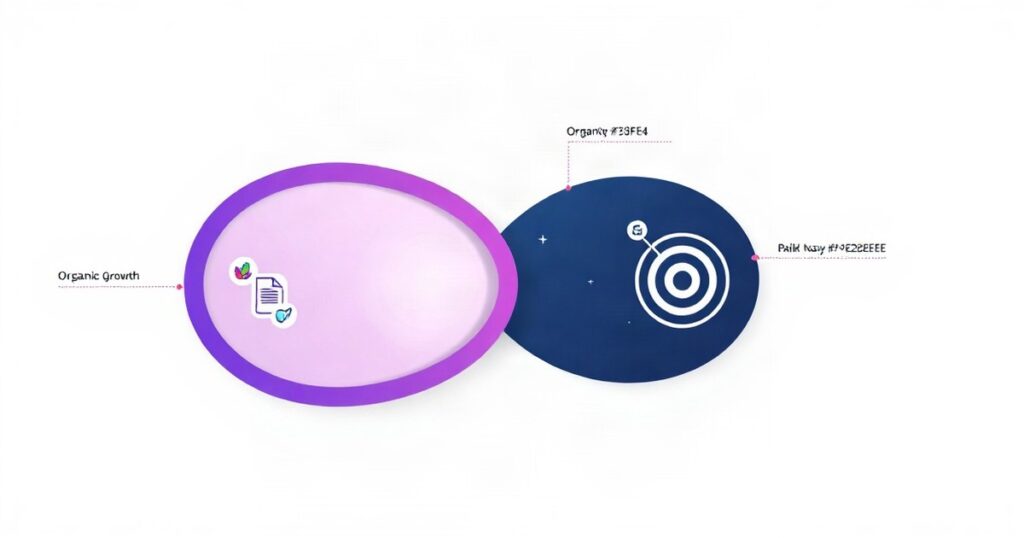
Once the organic foundation was in place, paid LinkedIn campaigns were introduced — not to replace organic, but to get existing content in front of audiences that wouldn’t find it otherwise.
The paid strategy used two approaches in parallel:
Thought Leadership Ads
Specific organic posts that were performing well were promoted directly through Thought Leadership Ads, which show content from an individual’s profile rather than a company page. This format tends to feel less like advertising and more like a recommendation — which matters when your buyer is suspicious of anything that looks like a sales push.
The target audience was layered by job title, company size, and industry vertical — matching the profile of their actual ideal clients.
Retargeting Engaged Visitors
A separate campaign retargeted people who had already visited the company website or engaged with LinkedIn content. These buyers already had some exposure to the brand. The ads served to them were more specific — focused on particular service areas and including a clear call to action to book a discovery call.
This separation was intentional. Cold audiences saw content designed to educate and build familiarity. Warm audiences saw content designed to prompt a conversation.
How the Two Channels Reinforced Each Other
The interaction between organic and paid is where the real value came from.
When a decision-maker saw a paid post and clicked through to the company page, they found an active, substantive presence — not a static brochure. The organic content gave context and depth. It answered questions they hadn’t asked yet. It demonstrated that the firm had consistent, considered perspectives on the problems the buyer was dealing with.
Several buyers who eventually became clients later described a pattern that looked like this: they saw a sponsored post, followed the company page, read a few months of content over a few weeks, and then reached out when an internal project created the right moment. The organic content kept the firm in their peripheral vision between touchpoints.
This is exactly what a long sales cycle requires. The buyer doesn’t decide in a single session — they come back. The organic content library gave them something to come back to.
What the Combined Approach Achieved
Over the course of the engagement, inbound enquiry quality improved measurably. Leads arriving through LinkedIn were better qualified than those from other channels — buyers had typically already read several posts, understood the firm’s positioning, and had a specific brief in mind when they reached out.
Sales conversations started at a different point. Instead of spending the first call establishing credibility, the team could move faster to diagnosing the client’s actual problem. The content had already done the positioning work.
The sales cycle didn’t shorten dramatically — complex B2B deals rarely do. But the conversion rate from first conversation to proposal improved, and the proposals themselves were more aligned with what buyers actually wanted.
What This Approach Requires
Running organic and paid LinkedIn together only works if a few conditions are in place:
- Consistent content production. Paid ads pointing to a company page with three posts from six months ago will not build trust. The organic engine has to keep running.
- Audience alignment between channels. The organic content, the paid targeting, and the sales team’s ideal client profile need to describe the same person. If they don’t, the channels pull in different directions.
- Patience on the paid side. LinkedIn paid ads in a B2B context are not a direct-response channel. If you’re measuring success by immediate form fills, you’ll undervalue what the ads are actually doing — building familiarity with buyers who aren’t ready yet.
- A clear handoff to sales. When buyers do reach out, the sales team needs to understand how they’ve been nurtured. Someone who has followed the page for three months needs a different first conversation than a cold inbound lead.
The Broader Point
LinkedIn is one of the few platforms where a single buyer might see your content organically on Tuesday, get retargeted with a paid post on Thursday, browse your page over the weekend, and email your sales team three weeks later — and that entire journey can be deliberately designed rather than left to chance.
For B2B companies with long sales cycles, that continuity of presence is more valuable than any single campaign. Organic builds it. Paid scales it. Neither works as well without the other.
If your current LinkedIn strategy relies on one or the other, that’s where the gap is.
Back to Blog